If there is one type of bread that embodies both Italy’s ancient roots and the freedom of modern cuisine, it is without a doubt focaccia. With its golden crust and soft, airy interior, this bread is more than just food—it’s a lifestyle, a bite of Liguria, a slice of Mediterranean joy.
Today you can find it in cafés and bakeries all over the world, yet its origins stretch back thousands of years, to a time when bread and daily nourishment were understood in an entirely different way.
The bread of ancient hearths
The story of focaccia reaches back to ancient Rome. The term panis focacius referred to a flatbread baked directly on the hearth or hot embers. Its root word, focus, meant “hearth,” making focaccia essentially the bread of the fire. For Romans, it was a daily staple: made of flour, water, and salt, brushed with olive oil so it would bake up crisp on the outside and tender on the inside. Some historians trace it even further back, to the Etruscans or the ancient Greeks, who also baked flat, oil-enriched breads over communal fires.
This bread was never just sustenance—it was part of communal life. People gathered around the fire while the focaccia slowly baked, filling the air with its fragrance. It’s no wonder that even today, this simple bread remains a symbol of Mediterranean warmth and conviviality.
Genoa and the Ligurian tradition
When we talk about focaccia today, most people think first of Genoa. The capital of Liguria is the birthplace of the classic focaccia. The Genoese version, focaccia genovese, is considered one of the highlights of Italian baking. The dough is about one centimeter thick, its surface dimpled by bakers’ fingertips so that little pools of olive oil and briny water can settle in. This gives it its rustic appearance and, of course, that unmistakable flavor that makes every bite special.
In Genoa, focaccia is not just bread—it’s part of daily life
Many enjoy it for breakfast, and according to tradition, it’s even dipped into cappuccino. Strange as it may sound, the pairing of sweet coffee with salty, olive-oil-rich bread creates a surprisingly harmonious contrast. Every morning, long lines form outside the city’s bakeries, the air filled with the aromas of baking bread and rosemary. Out of this tradition also came onion focaccia, generously topped with sweet, caramelizing onions. Once considered the breakfast of the poor—since onions satisfied hunger and focaccia provided substance—it is now a cherished specialty.
Italy’s many faces of focaccia
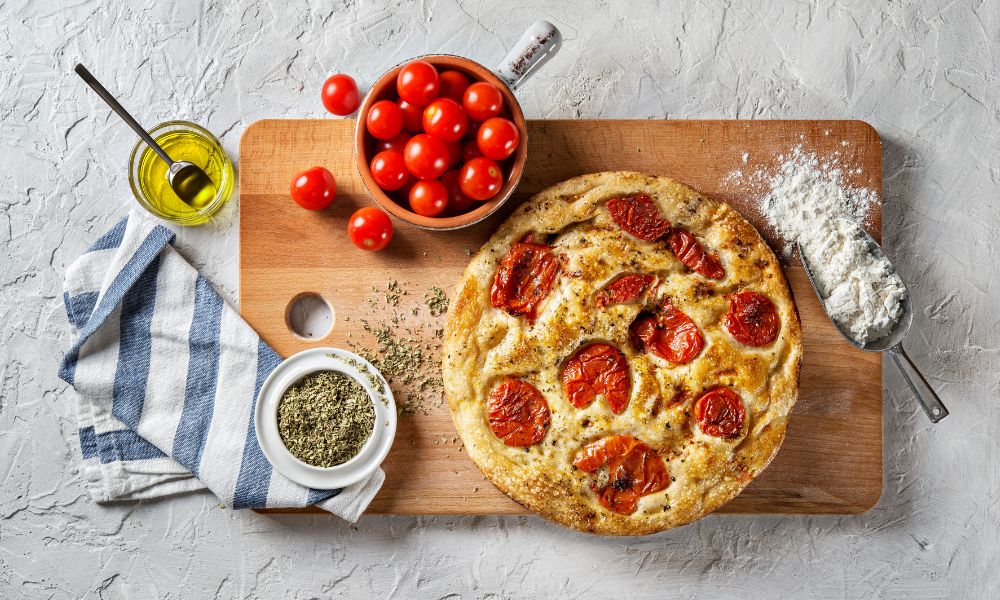
Like every Italian dish, focaccia has countless regional variations, each reflecting local tastes and traditions. In Puglia, for instance, focaccia dough is enriched with potatoes, making it even softer and moister. It’s often topped with tomatoes, olives, and oregano, transforming it into a dish in its own right rather than a simple accompaniment.
In Recco, the famous focaccia di Recco is a completely different experience: thin layers of dough sandwich melted cheese, resembling a rich, indulgent flat pie rather than bread. This version is so unique that it is protected by a geographical indication (IGP).
In northeastern Veneto, focaccia takes on a sweet identity. During Easter, it is often made with sugar, raisins, or eggs, resembling more of a festive cake than bread. In Tuscany, the well-known schiacciata is thinner and crisper than its Genoese cousin, often served simply with a drizzle of olive oil and a sprinkling of salt.
These regional differences show how focaccia is more than bread—it is a mirror of Italian culture, with each region expressing its own flavors and identity.
Pizza or focaccia?
The two are often confused, but they are more different than you might think. Pizza dough is rolled thin, baked quickly, and almost always covered in toppings. Focaccia, on the other hand, is thicker, airier, and contains far more olive oil. Its signature dimples, salty-oily crust, and rich simplicity make it a category of its own—somewhere between bread and flatbread, yet unique in character.
A star of the modern kitchen
In recent years, focaccia has gained a new level of fame in global gastronomy. Chefs and home bakers alike experiment with toppings. Tomatoes, zucchini blossoms, grapes, caramelized fruit, and even elaborate “focaccia art”. Where vegetables and herbs are arranged into edible paintings on the dough. While the traditional Genoese version is perfect in its simplicity, the freedom of modern cooking proves again and again how versatile this bread can be. Some chefs even recommend special techniques, such as sprinkling the dough with salted water before baking, to achieve the ideal balance of crisp and airy.
It’s no wonder that focaccia can now be found not only in Italian bakeries but also in New York, Tokyo, and beyond.
How to make authentic focaccia
Although there are countless ways to prepare it, a classic Genoese-inspired recipe is the best starting point: simple, reliable, and a true taste of the Mediterranean. The following recipe comes from the food blog The Belly Rules The Mind. (Authentic Italian Focaccia – The Belly Rules The Mind)
Ingredients:
- 1 cup warm water
- 2⅓ cups all-purpose flour
- 1 teaspoon sugar
- ½ teaspoon dry yeast
- ½ teaspoon salt
- 2 tablespoons olive oil for the dough
For the topping:
- 3 tablespoons olive oil
- 3 tablespoons warm water
- 5 cloves garlic, minced
- 1 tablespoon fresh rosemary
- Coarse sea salt
Method:
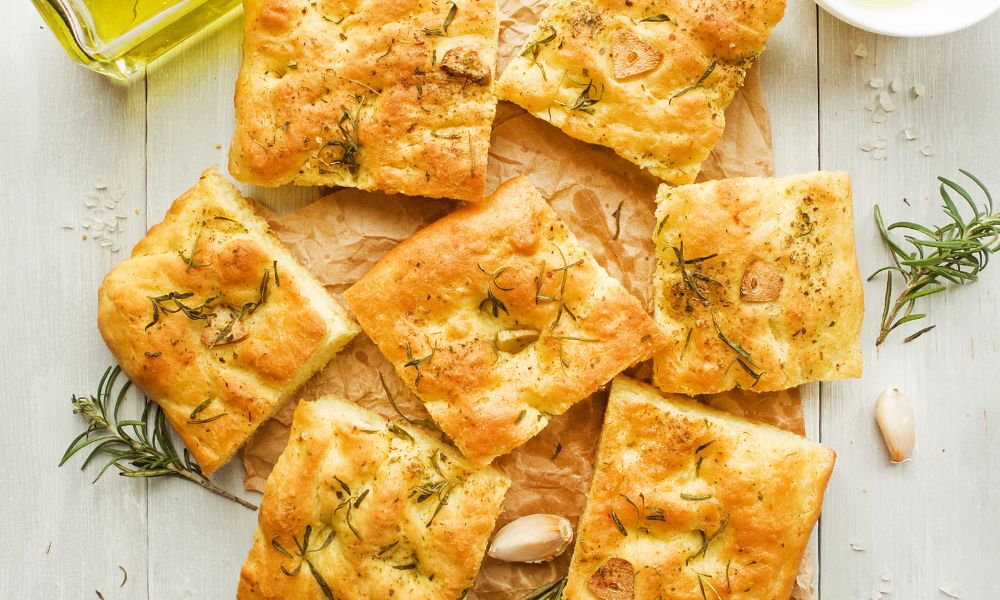
First, dissolve the yeast in warm water and let it activate. In a large bowl, combine flour, sugar, salt, olive oil, and the yeast mixture, kneading until smooth. Let the dough rise until doubled in size. Press it into a lightly oiled baking pan, using your fingertips to make dimples across the surface. Drizzle generously with the garlic-and-rosemary olive oil mixture, sprinkle with coarse salt, and bake in a 220 °C (425 °F) oven until golden brown.
The result? A bread that is crisp on the outside, airy on the inside, and—above all—a bite of Italy itself.
Frequently asked questions about focaccia
1. What makes focaccia different from regular bread or pizza?
Focaccia is thicker, airier, and much richer in olive oil than pizza. Unlike pizza, which is rolled thin and topped heavily, focaccia has a fluffy interior, a golden crust, and distinctive fingertip dimples that hold olive oil and briny water. It sits somewhere between bread and flatbread, yet has a character entirely its own.
2. Where does focaccia originate, and what does its name mean?
Focaccia has ancient roots reaching back to Rome. The term panis focacius described a flatbread baked directly over embers. The word focus means “hearth,” so focaccia literally began as “hearth bread.” Even earlier traditions from the Etruscans and Greeks also contributed to its history.
3. Why is Genoa famous for its focaccia?
Genoa is considered the home of the classic focaccia genovese. This version is about one centimeter thick, deeply dimpled, and brushed generously with olive oil and salted water. In Genoa, it’s part of daily life—often eaten for breakfast and even dipped into cappuccino. Onion focaccia is another beloved Ligurian specialty.
4. What regional variations of focaccia exist across Italy?
Italy is full of unique focaccia styles:
– Puglia: potato-enriched dough, topped with tomatoes, olives, and oregano.
– Recco: thin dough filled with melted cheese (focaccia di Recco, IGP-protected).
– Veneto: a sweet Easter version with raisins or sugar.
– Tuscany: thin, crisp schiacciata, served simply with salt and olive oil.
Each reflects the flavors and identity of its region.
5. How can I make authentic focaccia at home?
A classic Genoese-style focaccia is surprisingly simple: mix flour, yeast, warm water, olive oil, sugar, and salt into a smooth dough, let it rise, press it into a pan, and create dimples with your fingertips. Drizzle with olive oil, rosemary, garlic, and coarse salt, then bake at high heat until golden. The result is crisp, airy, fragrant—and unmistakably Italian.